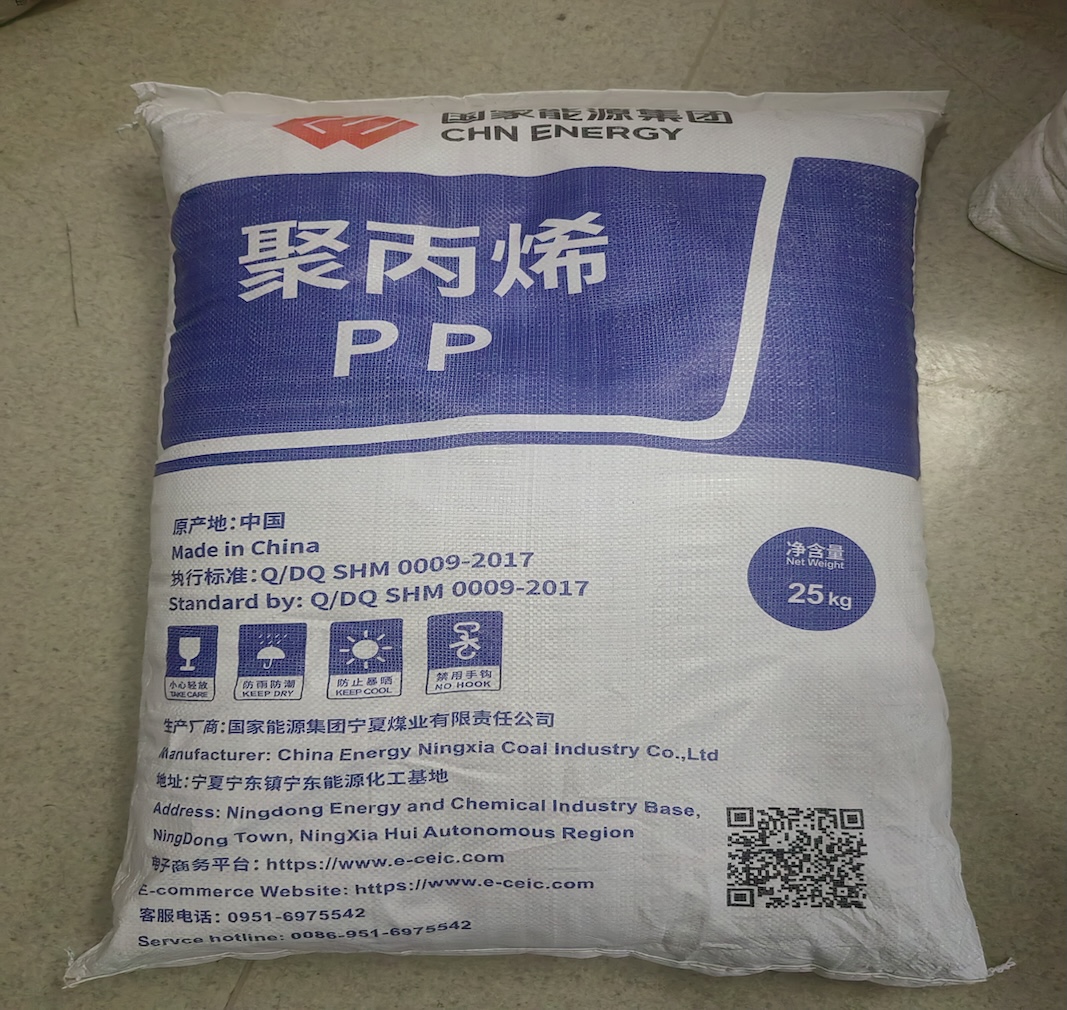
Most copolymer problems are not discovered at purchase. They show up weeks later as short shots, warped lids or parts that crack in a cold warehouse, when the cost of switching is already high. At Chengnuo, the buyers we work with ask about Ningxia Coal MB6408 at the evaluation stage, when they are comparing quotes. This guide turns the common pain points into checks you can run before you order.
Problem 1: Two Quotes, Two Datasheets, Same Melt Flow. Which Grade is Actually Tougher?
Melt flow tells you how a resin fills the mold, not how tough it is. For an impact copolymer, toughness comes from a dispersed rubber phase, and two numbers expose it: the xylene soluble fraction and the ethylene content inside that fraction. A patent study on impact copolymers varied exactly these variables and found that grades with similar melt flow could differ sharply in room-temperature impact. So when two quotes look identical, ask both suppliers for solubles and ethylene content. The one who cannot answer is selling you a number, not a grade.
Send us the datasheet you are comparing against. Share it through our inquiry page and we will line up the MB6408 TDS, test methods and batch COA beside it.
Problem 2: The Part Passed Izod but Cracked in Winter. Why?
Because impact values change with temperature, method and unit. The Hostacom PPN 1034 12 sheet shows 50 kJ/m² notched Izod at 23°C but only 4 kJ/m² at -30°C, and it reports melt flow at a 5.0 kg load, which cannot be compared with the usual 2.16 kg figure. One ExxonMobil copolymer datasheet lists Izod in J/m under ASTM D256 and again in kJ/m² under ISO 180; the two are not interchangeable. If your product ships or sits in cold conditions, require impact data at -20°C or -30°C, not only at room temperature.
| Buyer Problem | Property to Verify | Ask the Supplier For |
|---|---|---|
| Cannot tell two quotes apart | Xylene solubles, ethylene in soluble fraction | Both values, with test method |
| Parts crack in cold storage | Notched Izod at -20°C or -30°C | Low-temperature impact, same method as the benchmark |
| Short shots or flash after a new lot | Melt flow at 230°C/2.16 kg | Lot tolerance and batch COA |
| Parts too soft or too brittle | Flexural modulus and impact together | MPa value, test speed, nucleation status |
| Specks and gels on surfaces | Pellet cleanliness and ash | Ash content and a retained sample |
Problem 3: Every New Lot Needs Machine Adjustments. How Do You Prevent It?
This is the quiet cost buyers feel most. In our experience, lot-to-lot drift in melt flow causes more short shots and flash than any single property on the sheet. The same patent explains that melt flow is tuned through reactor hydrogen and, for higher flows, peroxide visbreaking, so process control at the producer decides how steady the number stays. Ask for a batch COA with every shipment, keep a retained sample from each lot, and approve volume only after a trial on at least two lots.
Problem 4: Stiff Enough and Tough Enough at the Same Time?
Buyers rarely get both without checking. The Sasol CMR648 listing shows the trade-off managed with a nucleating agent that speeds crystallization, improves the impact-to-stiffness ratio and shortens cooling time for crates and buckets. For a benchmark, Pro-fax EP648R lists 23 g/10 min, a flexural modulus of 1380 MPa and a notched Izod of 94 J/m for pails and closures. Ask whether your candidate grade is nucleated and compare it with the part you actually mold.
Want a cleaner trial? Tell us your part, wall thickness and minimum service temperature. We will reply with the TDS and COA points to compare, and can arrange a sample for a two-lot trial.
Conclusion
Before you commit to a copolymer, confirm the polymer type, read the test conditions, request low-temperature impact and solubles data, and verify more than one lot. These checks cost little and prevent most expensive surprises. To get the TDS, a batch COA or a quote for Ningxia Coal MB6408, send your application details or visit the Ningxia Coal MB6408 product page.
References
- No Break Polypropylene Impact Copolymers with Melt Flow Rate Higher than 90 g/10 min (US 11,661,506) – USPTO
- Hostacom PPN 1034 12 Product Data – LyondellBasell
- Pro-fax EP648R Product Data – LyondellBasell
- Exceed Flow PP7935E1L Product Datasheet – ExxonMobil Chemical
- Sasol Polymers PP CMR648 Datasheet – UL Prospector