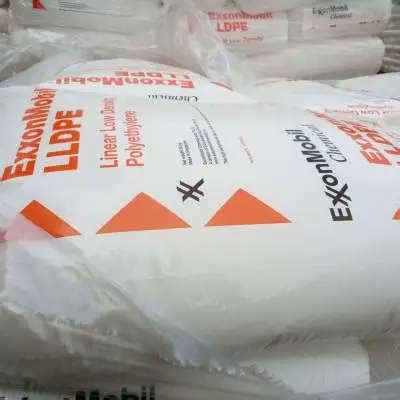
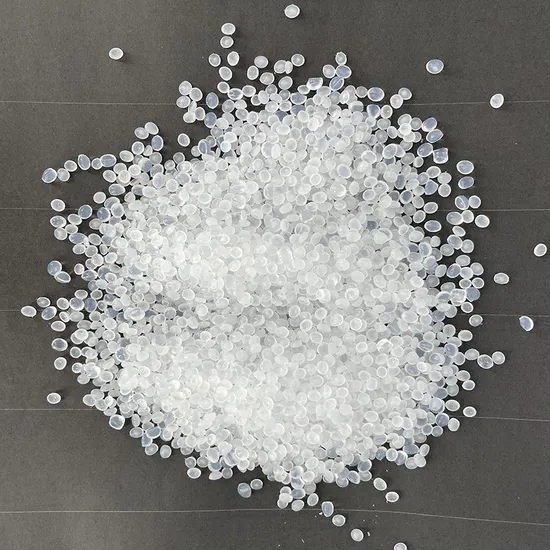
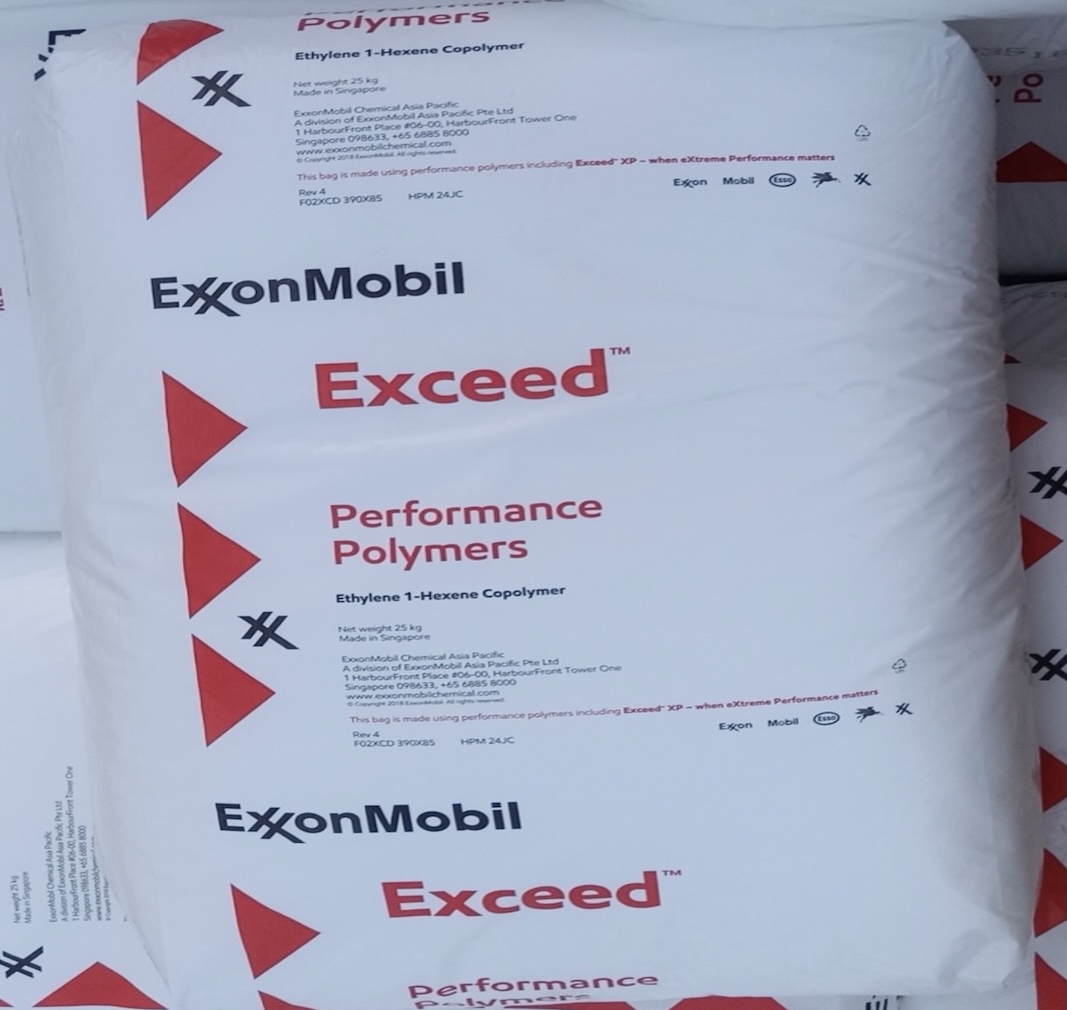
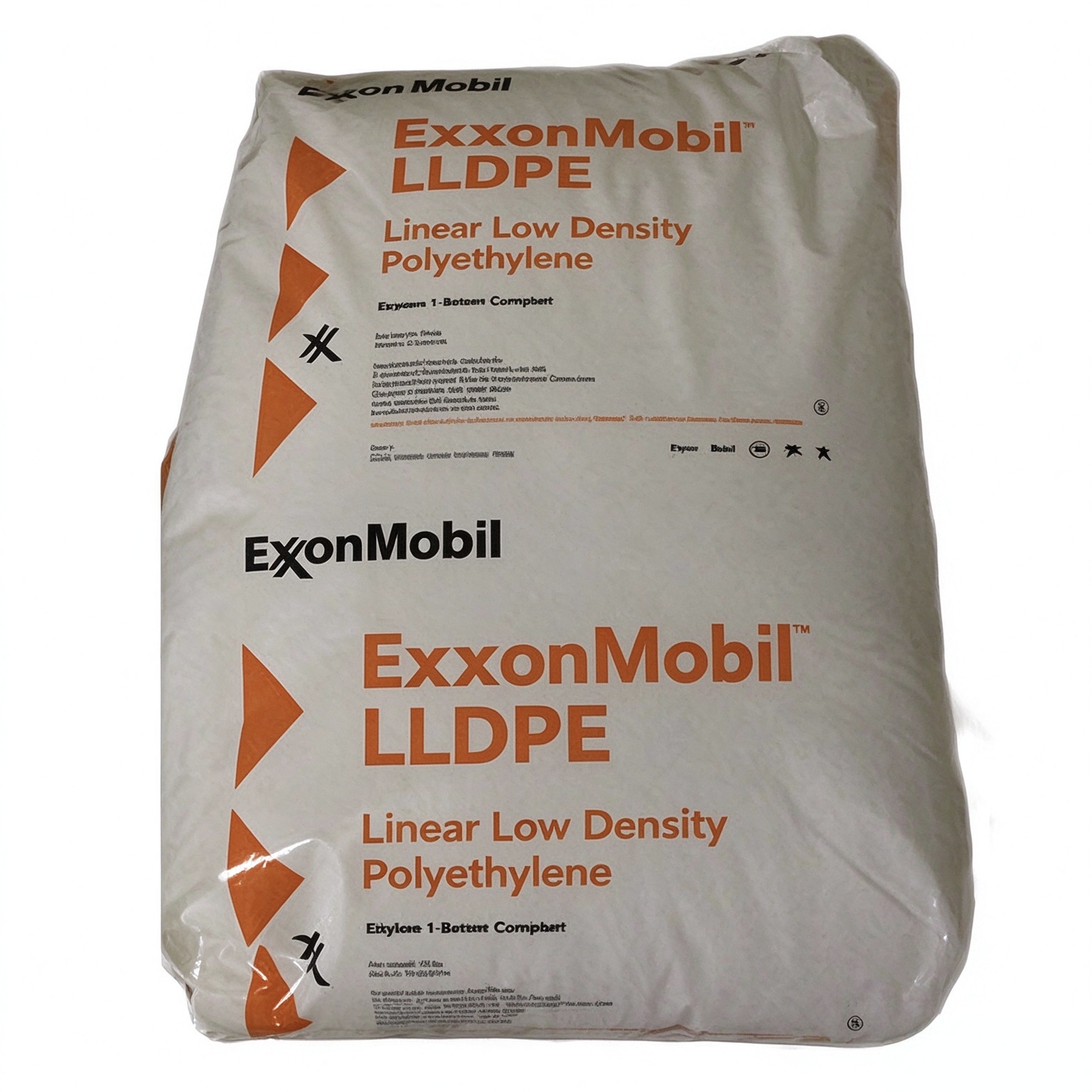
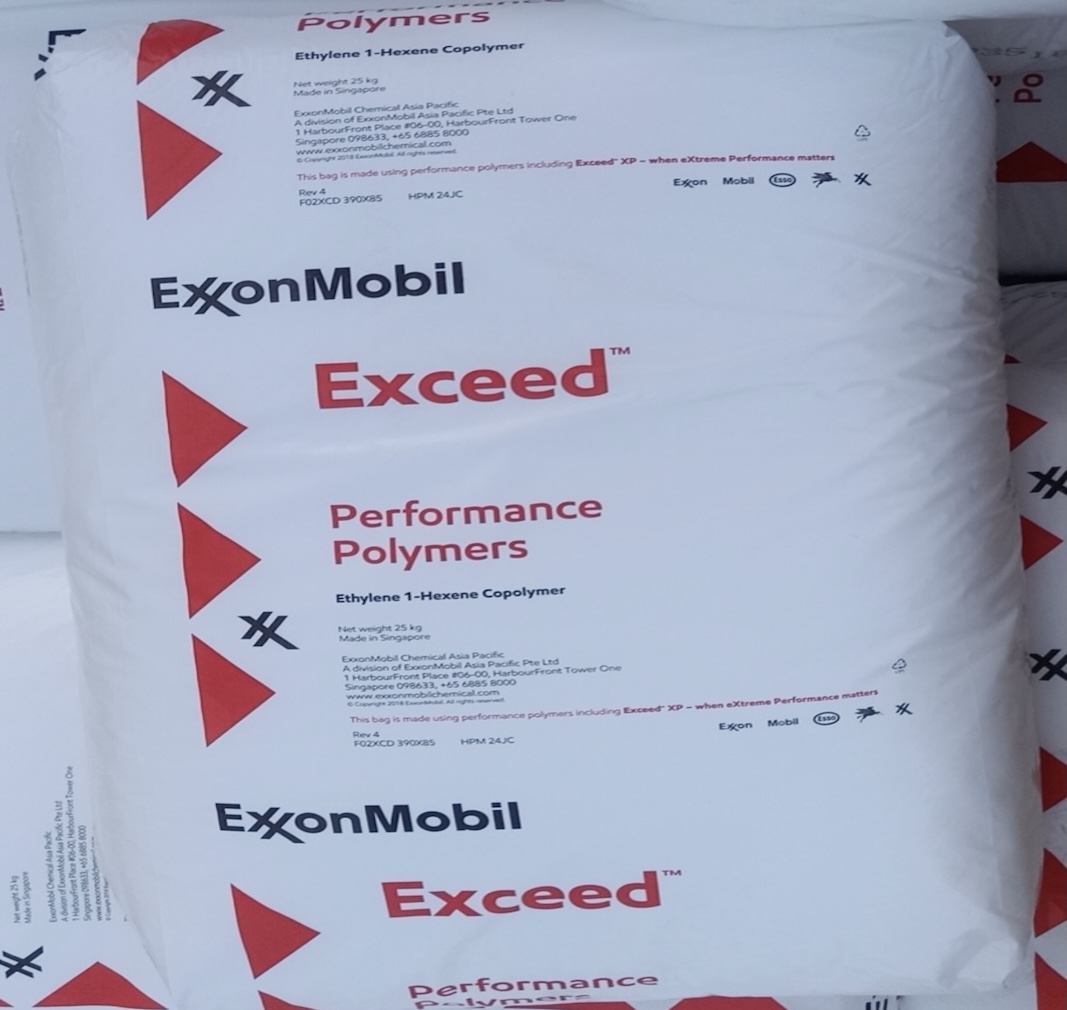
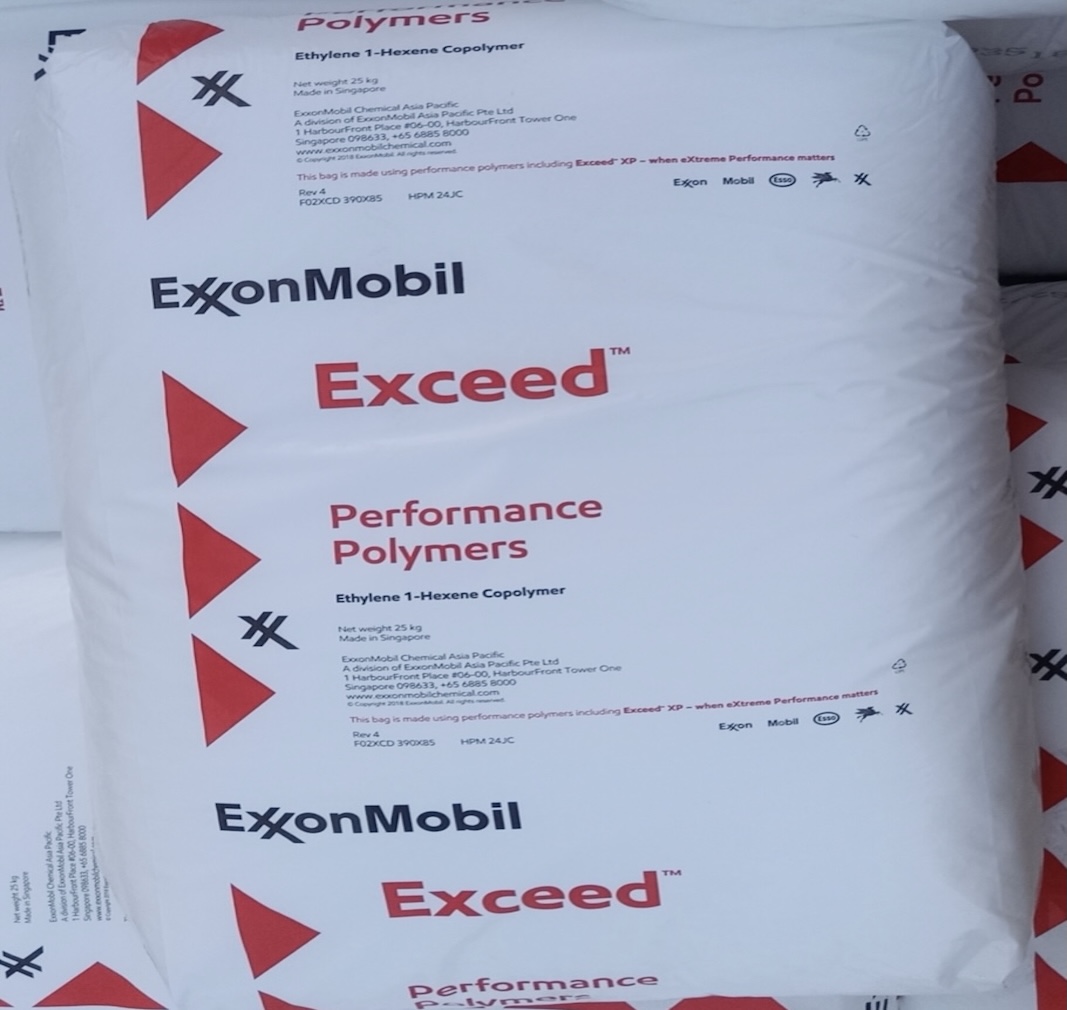
ExxonMobil 3518PA belongs to the Exceed m 3518 family of hexene metallocene LLDPE, a family ExxonMobil lists for cast stretch film. This page sets out the typical data stretch film producers need when assessing it as a metallocene LLDPE raw material for cast stretch film. Chengnuo can send the TDS and confirm the grade against your line and structure before you order.
Puncture Strength, Clean Formulation and Drawability in One Resin
Metallocene performance
An ethylene/1-hexene metallocene copolymer. ExxonMobil cites outstanding tensile, impact and puncture toughness, with typical dart drop of 140 g and puncture force of 47 N.
Clean LLDPE base resin
3.5 g/10 min melt index and 0.918 g/cm³ density, with no slip, antiblock or processing aid in the pellet. You set the additive package, including any cling system, yourself.
Cast stretch film use
Listed for cast stretch film and for monolayer and multilayer cast packaging film, with excellent drawability. Test film showed 86 gloss and 2.4% haze.
Tear balance for wrapping
Elmendorf tear is 500 g (TD) against 190 g (MD), which is worth checking against your pallet-wrap tear behaviour.
3518 Series Typical Data from the ExxonMobil Datasheet
| Property | Typical value | Test method |
| Density | 0.918 g/cm³ | ASTM D792 |
| Melt index (190 °C / 2.16 kg) | 3.5 g/10 min | ASTM D1238 |
| Peak melting temperature | 114 °C | ExxonMobil method |
| Tensile strength at yield, MD / TD | 8.3 / 7.6 MPa | ASTM D882 |
| Tensile strength at break, MD / TD | 70 / 47 MPa | ASTM D882 |
| Elongation at break, MD / TD | 510 / 680 % | ASTM D882 |
| 1% secant modulus, MD / TD | 110 / 120 MPa | ASTM D882 |
| Dart drop impact | 140 g | ASTM D1709A |
| Elmendorf tear, MD / TD | 190 / 500 g | ASTM D1922 |
| Puncture force / energy | 47 N / 4.3 J | ExxonMobil method |
| Gloss (60°) / haze | 86 / 2.4 % | ASTM D2457 / D1003 |
Measured on 0.8 mil (20 µm) film from a 3.5 in cast line, 277–310 °C melt temperature, 80 °F chill roll, 750 fpm. Values are typical, not specifications. They come from ExxonMobil's datasheet for the Exceed m 3518 cast-film grade; compare with the TDS supplied for your 3518PA batch.
Pallet Wrap, Multilayer Structures and Blends
Pallet stretch wrap where puncture resistance at loaded corners limits how thin the film can go.
Core or outer layers in multilayer cast stretch film, with the cling layer set by your own formulation.
Blends with conventional LLDPE to balance puncture performance against raw material cost.
Other listed uses: cast packaging film, food packaging and form-fill-seal packaging, per ExxonMobil.
Food-contact and other regulatory requirements depend on your market and need documentation. For grade details, see the ExxonMobil 3518PA mLLDPE cast film resin buying guide.
Common Questions from Stretch Film Producers and Buyers
1. What should producers check first when comparing metallocene LLDPE raw material for cast stretch film?
Look at puncture and dart results together with the additive package, then run a trial at your own pre-stretch ratio. The datasheet alone does not show stretch behaviour.
2. Why does pallet wrap tear at the corners even when it looks thick?
Sharp corners concentrate the load. Puncture and tear resistance matter more there than thickness alone.
3. Does a resin with no slip or antiblock make cling easier to control?
It can. Slip migrates to the surface and reduces cling, so an unadditized base resin leaves the cling layer to your own formulation. Confirm this in your structure.
4. Can thinner stretch film still hold boxes together when moving house?
Higher puncture resistance lets a thinner film hold a load, but hand wrapping stretches the film less than a machine does. Use more overlap and extra turns on heavy boxes.
5. Is this grade used alone or blended with conventional LLDPE?
Both approaches are used. Blending is common when a producer wants metallocene puncture performance while managing raw material cost, and trials show the right ratio.
Request the TDS and Confirm the Grade for Your Line
Send Chengnuo your film structure, target gauge and line speed. We will provide the TDS for ExxonMobil 3518PA and quote once the grade is confirmed. Request the TDS and a quotation.