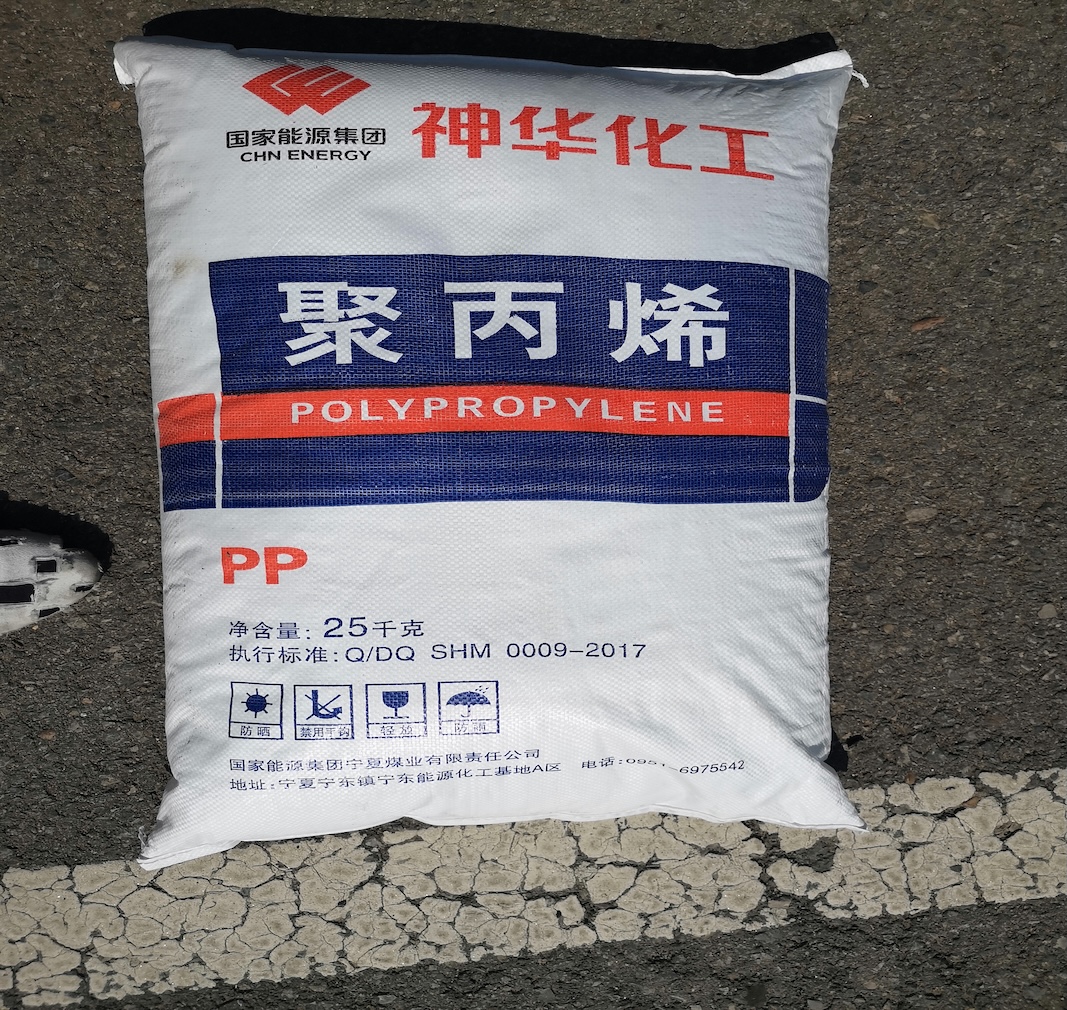
Search for Ningxia Coal 1102TC alongside extrusion coating and you will notice a mismatch worth clearing up first. According to the Chengnuo product page, Ningxia Coal 1102TC is a homopolymer with a melt flow rate of 3.0 g/10 min, made for flat yarn extrusion. It is a raffia tape resin, not a coating resin. Yet it sits at the center of coated woven sacks, because the fabric under the coating is made from it. Melt flow explains both sides of that relationship.
Where does 1102TC Sit in a Coated Sack System?
Coated woven sacks are built in two stages. A raffia line extrudes and stretches tape, which is woven into fabric. A coating line then laminates a thin polypropylene layer onto that fabric to improve moisture barrier, dust control and printability. Coating suppliers describe the end use plainly: one ultra-high-flow homopolymer datasheet lists waterproofing of raffia bags and big-bags as a target application. The tape resin and the coating resin therefore do different jobs, and melt flow is the property that separates them.
Why does Melt Flow Split the Job in Two?
A tape resin needs high molecular weight so the stretched tape holds load. A coating resin needs to flow into a thin, wide film at line speed. Published grades show the gap clearly. Moplen EP6136 is a PP copolymer for raffia fabric coating at 30 g/10 min, while Moplen EP310RM for woven bag coating sits at 28. The tape-side resin is a factor of ten lower.
| Resin Role | Typical MFR (230°C/2.16 kg) | Example | Main Job |
|---|---|---|---|
| Raffia tape resin | 3.0 g/10 min | Ningxia Coal 1102TC | Tape strength and stretch stability |
| Coating copolymer | 28–30 g/10 min | Moplen EP310RM, EP6136 | Thin film, low neck-in, adhesion |
| Ultra-high-flow homopolymer | 80 g/10 min | Braskem H107 | Very thin waterproofing layers |
What does Melt Flow Change Inside the Coating Die?
Coating engineers balance conflicting demands. A classic coating patent explains that raising melt flow reduces extruder surging and improves adhesion to polypropylene substrates, while lowering melt flow and temperature reduces neck-in, the width lost between the die and the nip. Because the two goals pull in opposite directions, usable settings sit in a narrow window. In practice, converters watch edge trim, since neck-in turns directly into wasted fabric. A separate coating study on polypropylene woven fabric measured adhesion with a pressure balloon test and neck-in as die width minus coating width, which are the same two numbers worth tracking on your own line.
What does the Tape Resin Contribute to Coating Quality?
More than most buyers expect. The fabric is the substrate, so tape quality decides coating quality. In our experience at Chengnuo, three tape-side factors show up on the coating line:
First, uniform tape denier gives flat fabric and an even coat weight. A 3.0 melt flow stretches into strong, consistent tape when the line is balanced. Second, surface chemistry matters. Ningxia Coal 1102TC carries only a thermal stabilizer, with no slip or anti-block package, so there is less additive to bloom to the tape surface, which is a common hidden cause of weak adhesion and peeling. Third, moisture. Low water carry-over is a selling point for raffia grades such as Advanced-PP 1102K, and the reason carries into coating: water left on tapes or in damp fabric can appear later as pinholes or blisters under the hot melt film.
What Should You Check before a Coating Trial?
Start with the pairing, not the single resin. Weave a fabric from the 1102TC lot, store it dry, and coat it with your chosen high-flow resin at your normal line speed. Record neck-in, coat weight variation and peel adhesion, then repeat after a few days to catch slow additive migration. Remember the limits stated on the product page: the pellets contain no UV stabilizer, so sacks stored in sunlight need UV protection in the tape or the coating. Chengnuo supplies the TDS and a batch COA with each shipment so any trial result traces back to a specific lot.
Conclusion
Melt flow decides which side of the coating line a resin belongs on. Ningxia Coal 1102TC, at 3.0 g/10 min, is a tape resin whose strength, cleanliness and surface condition set up the fabric for coating, while the coating layer itself needs a grade in the 28 to 80 range. Treat them as a matched pair and test them together. For specifications or a quote, visit the Ningxia Coal 1102TC product page.
References
- Polypropylene H 107 Data Sheet – Braskem
- Moplen EP6136 Product Information – HMC Polymers
- Moplen EP310RM Product Data – LyondellBasell
- US Patent 4,211,692: Extrusion Coating Compositions for Woven and Non-Woven Polyolefin Substrates – Google Patents
- US Patent 6,593,004: Extrusion Coating Composition – USPTO
- Advanced-PP 1102K Datasheet – UL Prospector