Shenhua 7042 LLDPE: What Type of Film Resin Is It? A Q&A Guide for Film Processors
Most buyers know that 7042 makes shopping bags and mulch film, yet many cannot place it inside the LLDPE family. Instead of repeating datasheet numbers, this guide answers the questions film converters actually ask, using public sources and the line-trial experience we gather while supporting customers at Chengnuo.
Quick answer: Shenhua 7042 is a coal-based, butene-copolymer, general-purpose blown-film LLDPE. It is built for cost-sensitive mass production of carrier bags, liners and standard mulch film, not for heavy-duty sacks or high-performance film.
Shenhua 7042 at a Glance
| Property | Value |
|---|---|
| Density | 0.920 g/cm³ (range 0.917–0.923) |
| Melt flow rate (190°C/2.16kg) | 2.0 g/10min (range 1.7–2.3) |
| Tensile yield strength | ≥8.0 MPa (typical 12.0 MPa) |
| Tensile breaking strength | ≥12.5 MPa |
| Elongation at break | ≥600% (typical ≥700%) |
| Haze (50μm film) | ≤14% |
| Additive system | Slip agent pre-added, no antiblock agent |
These are typical values for reference. See the full table on the Shenhua 7042 product page, and always verify against the lot COA.
What type of LLDPE is Shenhua 7042?
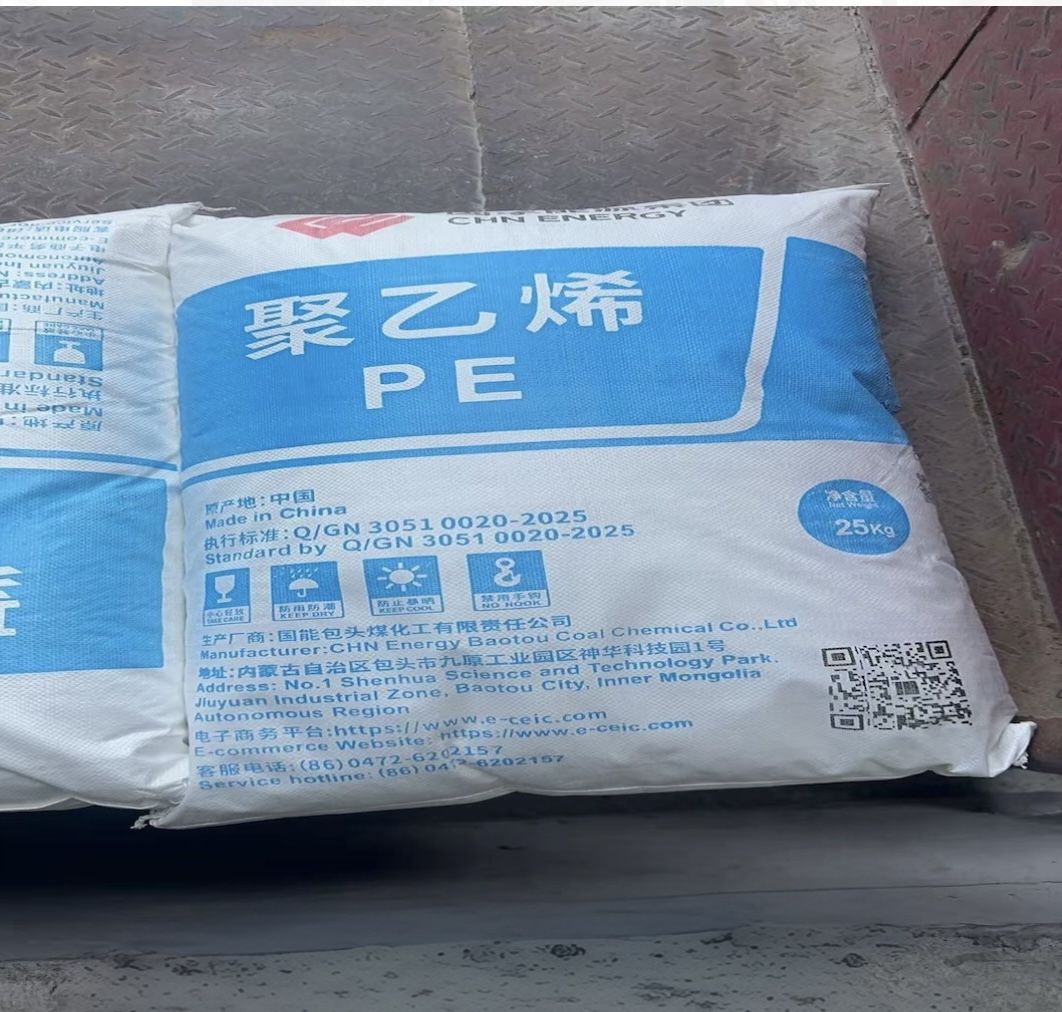
Shenhua 7042 is a coal-based, butene-copolymer, general-purpose blown-film LLDPE. Each label matters. "Butene" means a C4 comonomer, the most cost-effective route in LLDPE. "General-purpose" means balanced toughness and processability rather than a specialty strength or clarity target. "Coal-based" describes the feedstock: the Shenhua Baotou complex turns coal into methanol, then into olefins, and its polyethylene and polypropylene capacity was reported at about 600,000 tons a year, split equally, by Yicai Global.
Is 7042 a Shenhua-only grade or a shared grade number?
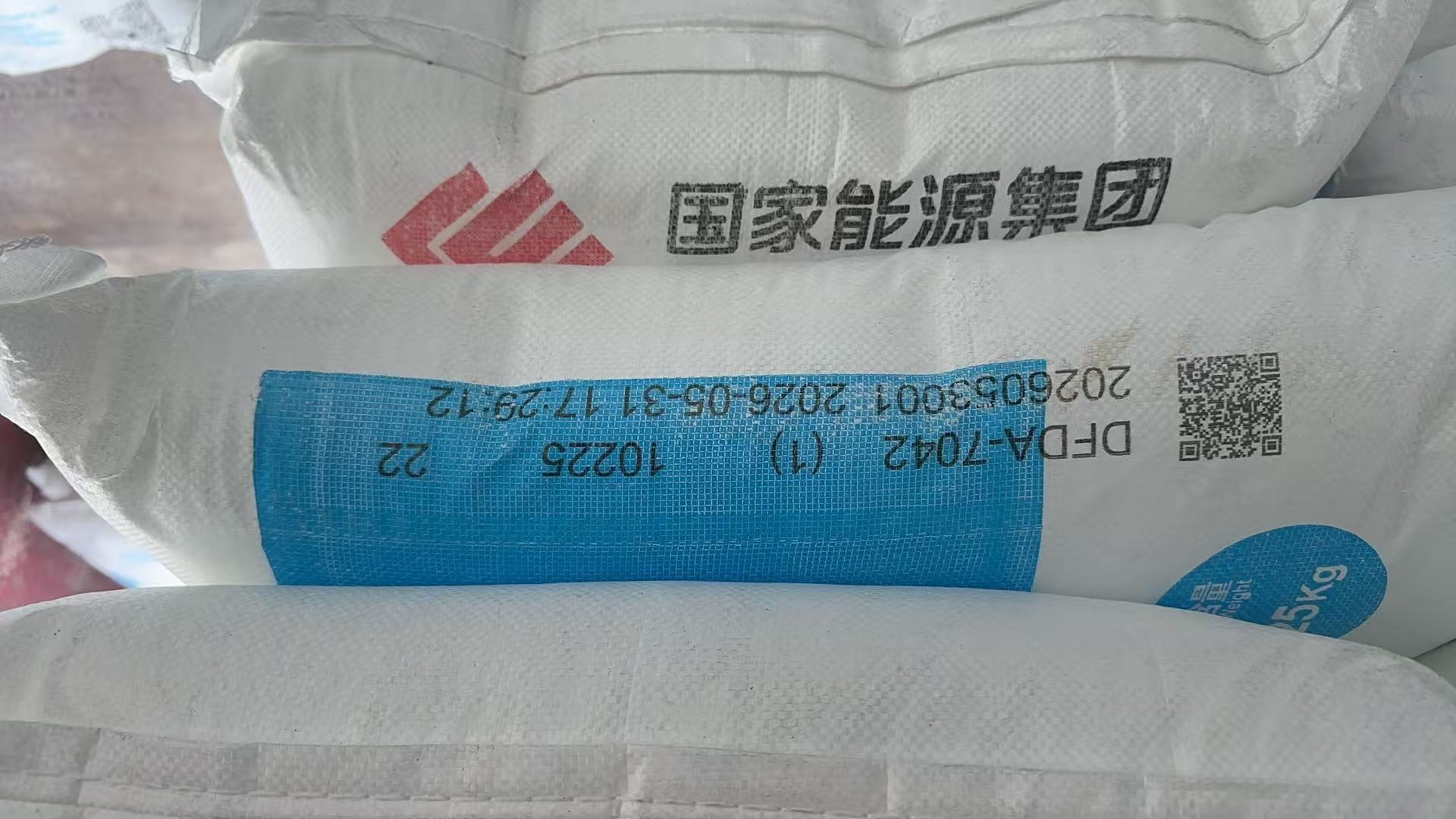
It is a shared number. Orpic's Luban DFDA-7042 is also a butene LLDPE for blown film, positioned for garment film, freezer film, can liners and produce bags, with food-contact compliance under U.S. FDA 21 CFR 177.1520. A comparable general-purpose butene film resin, Formolene L42022B, lists a melt index of 2.0 g/10 min and a density of 0.919 g/cc. We treat that range as the typical neighborhood for a 7042-type grade, but we never assume two producers' 7042 behave identically. The lot COA is the only reliable reference.
Where does 7042 sit among film-grade LLDPE?
Film-grade LLDPE splits by comonomer and by performance target. The table below shows where a 7042-type resin belongs and where it does not.
| Film-grade category | Typical comonomer | Performance focus | Is 7042 a fit? |
|---|---|---|---|
| General blown film | Butene (C4) | Balanced toughness, low cost | Yes, its core use |
| Heavy-duty sack film | Butene or hexene | Puncture and tear strength | Light duty only |
| High-performance / metallocene | Hexene or octene (C6/C8) | Dart impact, sealing, clarity, down-gauging | No |
| Anti-aging agricultural film | Varies | Outdoor service life | Single-season mulch only |
The practical lesson: do not pay for hexene or octene performance if your film is a thin carrier bag, and do not push a butene general-purpose resin into a job that needs impact strength.
Does coal-based origin change how the resin runs on the line?
For most converters, the answer is no. Polyethylene chemistry is the same once the polymer is made, so the real differences are supply and price. A dated Plastemart report from 2014 noted that coal-based LLDPE sold CNY 100-200 per ton below normal LLDPE and was marketed only inside China. Market structure has changed since then, so treat that figure as history, not a current quote.
When a customer switches from an oil-based 7042 to Shenhua, we suggest checking three things on the first trial rolls instead of worrying about feedstock: the stable melt-temperature window, bubble stability at your usual blow-up ratio, and gel count. Run a full shift on one line before committing volume.
How should you trial-test a new 7042 lot before full production?
Keep the trial boring and repeatable. The reference datasheets quote film properties on 25-micron blown film at a 2.5:1 blow-up ratio, so use the same gauge and ratio as your baseline. Fix the die gap and temperature profile, then log melt temperature, head pressure and motor load for the old resin and the new one back to back. A resin that needs noticeably higher motor load at the same output is telling you something about its melt index before the COA does.
Next, measure gauge variation across the web, and keep retained rolls for heat-seal and tear checks a few days later. In our experience, most disputes between converters and suppliers come from skipped baselines rather than bad resin. Without a baseline, nobody can say whether the lot changed or the line drifted.
Why does the additive package matter more than the grade number?
This is the point most competing pages skip. The datasheet for Formolene L42022B shows the base resin with no slip and no antiblock, a haze of 35 percent and a dart impact of 65 g/mil. Its sibling grade, L42022E2, carries 7,000 ppm antiblock and 1,350 ppm slip. Same polymer family, very different film behavior on the winder and at the bag-making machine.
Shenhua 7042 sits in between: our product specification lists slip agent pre-added and no antiblock agent, which gives you control over blocking but also responsibility. A bag film without enough antiblock sticks layer to layer and becomes hard to open. A film with too much slip slides on the winder. The 3M technical paper on blown film warns that antiblock, a non-melting solid, can interact with fluoropolymer processing aids and weaken melt-fracture control. If your line already uses a processing aid, add masterbatches one at a time and measure film-to-film friction after 24 hours, not only on the day of extrusion.
Which products suit Shenhua 7042, and which do not?
| Suitable | Unsuitable |
|---|---|
| Supermarket shopping bags, garbage bags, standard agricultural mulch film, light-duty inner packaging for food | Industrial heavy-load sacks, multi-season greenhouse film, premium stretch wrap, injection-molded parts |
The comparison data show why. A general-purpose base resin with 35 percent haze and 65 g/mil dart impact is built for economy and runnability, not for glossy premium packaging or severe puncture loads.
Mulch film deserves a specific warning. A 7042-type base resin without UV stabilizer is fine for a single growing season, but converters who add UV masterbatch to stretch it across two seasons often discover that film strength falls faster than the masterbatch supplier promised. If the film must survive outdoors for longer, move up to a purpose-made anti-aging agricultural grade instead of loading more additive into a general-purpose resin.
How should buyers evaluate a 7042 offer?
Start with price behavior. 7042 is a benchmark grade in Chinese market reporting: SunSirs recorded Fujian Refining and Chemical 7042 at 6,800 RMB per ton on January 14, 2026, up 200 RMB in a single day, roughly 3 percent. Treat that as a historical reference and ask for a current quote. A quote without a validity period is incomplete.
Our checklist at Chengnuo before a purchase decision is short:
- Melt index and density on the COA match your line and film gauge.
- The additive declaration confirms whether slip and antiblock are present.
- Lot-to-lot consistency is documented, not promised.
- The delivery cycle fits your production plan, since coal-based and oil-based supply cycles differ.
One more habit saves money: compare offers on a delivered, same-additive basis. A cheaper base resin plus your own slip and antiblock masterbatch can cost more than a pre-additivated grade, and the reverse is also true. Ask each supplier to state the grade, additive package, packaging and payment terms in the same quotation, so that two numbers are genuinely comparable.
Conclusion
Shenhua 7042 is a coal-based, butene-copolymer, general-purpose blown-film LLDPE for cost-sensitive mass production. Choose it for carrier bags, liners and standard mulch film, control antiblock yourself, and verify every lot against its COA. Match the resin to the film you actually sell, and avoid paying for performance your product never uses.
View the Shenhua 7042 product page or contact the Chengnuo team for the technical datasheet, COA, free samples and a quotation.
References
Yicai Global. Shenhua Energy Gets Green-Light to Build USD2.558 Billion 750,000-Ton CTO Plant
SpecialChem. Orpic Luban DFDA-7042
Formosa Plastics USA. Formolene L42022B LLDPE Resin Data Sheet
Plastemart. China's coal-based polyolefin capacity to cross 5.9 mln tons by end 2014
3M. Reducing Antiblock and Polymer Processing Additive Interactions for Improved Blown Film Melt Fracture Elimination
SunSirs. Fujian Refining and Chemical LLDPE 7042 price report, January 14, 2026