From Production Needs to Grade Approval: A Polymer Material Selection Guide
How to Match Polymer Grades with Real Manufacturing Requirements
Many buyers pick a polymer by grade name or price. Then the line runs slowly, the product fails, and the real cost shows up. I have seen it often.
Match a polymer grade to your manufacturing needs in three steps. List the process and product requirements first. Check each grade's datasheet against those requirements. Then compare total cost, not only price per ton. Dalian Organic H39S-2 shows how this works.
Most selection guides list general factors and stop. They rarely show one real grade. I will use H39S-2 as the example, and I will show how I work through the same steps at Chengnuo. Keep reading, because a missing datasheet can cost more than a higher price.
Why Production Requirements Should Come before Polymer Grade Selection?
Buyers start with a grade name. Then they find the grade does not fit the line. Starting from the requirement avoids that.
Production requirements should come first because they set the limits for every grade. The process, line speed, product shape, and end use decide which melt flow, strength, and additives you need. A grade only fits if it meets those limits.
Write the Requirement First
One well-known list of ten considerations puts cost first. It then covers environment, property data, processing data, and approvals. The list is sound, but I reorder it. I begin with the real load case and the real line. For a fiber line, I write down spinning speed, fiber size, and end use. For a film line, I write down gauge and sealing. Only then do I open a datasheet. That list says to gather data from datasheets, but it does not show how to read them. At Chengnuo, I give buyers a one-page requirement sheet. It lists the process, the target product, the rules to meet, and the cost limit. Every grade is judged against that sheet. This habit also protects the buyer in talks with suppliers. When a trader says a grade is "the same" as another, I can test that claim against a written target. A claim without a target is only a sales line, and it tells me nothing about the line I run.
Where does Dalian Organic H39S-2 Fit into the Material Selection Process?
Search for H39S-2 and you find few clear answers. Grade codes repeat across producers, and pages disagree.
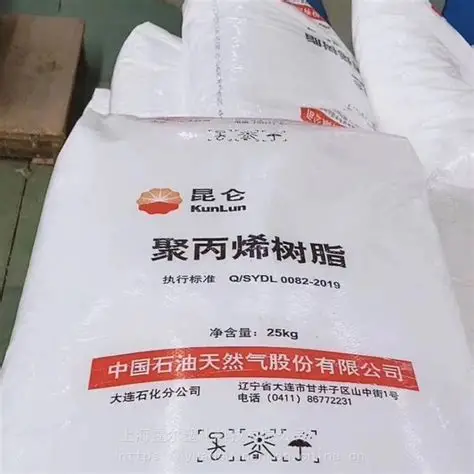
Dalian Organic H39S-2 appears in distributor tables as a PP-H fiber grade, with melt flow around 35–45 g/10 min across H39S variants. It fits spinning and similar high-flow processes. Confirm the exact value on the producer's datasheet before use.
One Code, Several Sources
I checked three sources. A distributor's fiber table lists H39S-2 and H39S-3 under Dalian Organic and Zhongmei E'neng. A Chinese grade list gives Dalian Organic's H39S an MFR of 35 for high-speed spinning lines. A European datasheet uses H39S for another producer's grade, aimed at film, tubular film, and filament yarn. The first two sources agree on the fiber use. The third shows how easily one code can lead a buyer to the wrong page.
| Source | Grade listed | Producer named | What it shows |
|---|---|---|---|
| Distributor fiber table | H39S-2, H39S-3 | Dalian Organic, Zhongmei E'neng | PP-H fiber grade; MFR about 35–45 across H39S variants |
| Chinese grade list | H39S | Dalian Organic, Liaoning Huajin | MFR 35; for high-speed spinning lines |
| European datasheet | PP 1452S (H39S) | Nizhnekamskneftekhim | Homopolymer for film and filament; values need an account |
Three facts stand out here, and each one changes how I buy. The code is shared. The suffix "-2" is not explained. The melt flow comes as a range. So I treat H39S-2 as a candidate until I hold the producer's datasheet. I also remember that higher MFR makes flow easier but lowers impact strength. That matters if your product must be tough. Fiber makers often accept this trade, because flow and drawing speed come first. A strapping or packaging band may need more toughness, so I ask the end user what the product must survive. The answer tells me whether a high-flow grade is a good fit or only a cheap one.
How to Balance Processing Performance, Product Requirements, and Total Cost?
A cheaper resin can still cost more. Breaks, scrap, and slow lines add up fast.
Balance the three by ranking them. Processing performance sets what runs on your line. Product requirements set what you must deliver. Total cost counts yield, scrap, downtime, and testing, not only price per ton. Pick the grade that meets the first two at the lowest total cost.
Ranking the Trade-Offs
I start with the must-haves: process fit and the rules your product must meet. Then I compare cost per good product, not cost per ton. For a high-flow fiber grade like H39S-2, I check three things. First, spinning stability at your speed. Second, fiber strength after drawing, because a resin that spins well but draws poorly is no bargain. Third, lot-to-lot change. ASTM D1238 says melt flow is mainly a quality-control value and may not predict large-scale processing. So I ask for lot-to-lot MFR data, not one number. A grade that costs slightly less but varies from lot to lot will cost more in breaks and scrap. In my experience, this one check often decides the winner. I also count the cost of testing. A short trial costs little. A failed full order costs a lot. So I put sample trials into the budget from the start, and I let the trial results, not the price list, set the final ranking.
Turning Polymer Material Selection into a Practical Purchasing Decision?
Analysis does not end in an order, and good analysis can still fail at the purchase step. Without a clear buying step, good work stalls or goes wrong.
Turn selection into a purchase with a shortlist, a verified datasheet, a sample trial, and a written specification. Confirm the producer, the grade code, and the melt flow range. Then agree on lot certificates and test methods before the first order.
My Purchasing Steps
I use five steps. One, shortlist two or three grades. Two, confirm the producer and the exact code, including suffixes such as -2 or -3. The fiber table lists them as separate grades, so I never treat them as one. Three, get the official datasheet and note the test methods and edition. Four, run a trial on your line. Record spinning breaks, yield, and fiber strength. Five, write the agreed MFR range, the packing terms, the test method, and the lot certificate into the order. At Chengnuo, I would rather answer many questions before the order than handle a rejected lot after it. Good records help too. I keep the datasheet, the trial log, and the lot certificate together for every grade I approve. When a problem appears months later, those papers show quickly whether the cause is the resin, the line, or the order terms.
Conclusion
Start with the production requirement, confirm the grade identity, and judge total cost. For Dalian Organic H39S-2, verify the datasheet and run a trial before you buy.
References
10 Key Considerations for Selecting a Plastic Material – Find Out About Plastics
PP-H Fiber Grade – Dawn Group
NEFTEKHIM PP 1452S (H39S) Datasheet – UL Prospector
Polypropylene – Wikipedia
ASTM D1238: Melt Flow Rates of Thermoplastics by Extrusion Plastometer – ASTM International