A woven bag line runs for hours without stopping, so a resin either keeps the tapes steady or it does not. Raffia is one of the fastest-growing segments of polypropylene, and woven sacks take a large share of it, mainly for cement, fertilizer, grain and chemicals. Buyers who ask about Ningxia Coal 1102L usually have the same few questions. At Chengnuo, we supply 1102L to sack converters, and the answers below come from what we see on real tape lines.
Why is a Homopolymer Grade Used for Raffia Tape?
Because the tape gets its strength from stretching. Woven sack tape is drawn many times its original length, which aligns the polymer chains, and homopolymer PP crystallizes well enough to give the stiffness that stretched tape needs. Producers confirm the direction: a high-speed raffia trial of a 1102-series homopolymer reported higher line speed, lower processing temperature and reduced residual shrinkage compared with standard grades. The Advanced-PP 1102L datasheet also lists raffia as a target use with low water carry-over, so the 1102 family is built for this job.
Is a Melt Flow Rate of 3.0 Right for My Line?
For heavy-duty sacks and standard-denier tapes, yes. The Chengnuo product page lists 3.0 g/10 min for Ningxia Coal 1102L, while peer grades such as IOCL P1045RG and Senhua S1005 are listed around 4.5. In our experience, a lower MFR leans toward higher tenacity and a sturdier tape but asks for slightly more melt temperature and head pressure, while a higher MFR draws finer denier more easily. Converters running very fine tapes should test 1102L against a higher-flow grade before committing.
| Property | Typical Value for 1102L | What It Means on the Line |
|---|---|---|
| Melt flow rate (230°C/2.16 kg) | 3.0 g/10 min | Balance between tape strength and drawing speed |
| Density | 0.905 g/cm³ | Tape yield per kilogram of resin |
| Tensile yield strength | 32 MPa | Load capacity of the finished sack |
| Elongation at break | 150% | Tolerance during stretching |
| Ash content | ≤0.03% | Cleaner melt and longer screen pack life |
| Additive system | Thermal stabilizer only | Low migration, no slip or anti-block carry-over |
| Extrusion temperature | 190–225°C | Working window for single-screw raffia extruders |
Why Do Tapes Break, and is the Resin always the Cause?
Not usually. Raffia lines cool the film in a water bath before slitting, and water carried into the stretching oven causes spitting and breaks, which is why raffia grades are sold on low water carry-over. A typical raffia homopolymer datasheet gives a melt temperature of 210–260°C and a stretching temperature near 150°C, a useful reference for any new resin. For 1102L, the Chengnuo page recommends a 190–225°C barrel profile. Before blaming the pellets, check die cleanliness, bath temperature and oven balance first, because they cause more downtime than resin quality does.
Is 1102L Safe for Food Packaging, and Can the Sacks be Used Outdoors?
Food contact, yes. Outdoor storage, only with a UV package. The resin carries only a thermal stabilizer, with no slip or anti-block masterbatch, which keeps surface migration low for sacks holding grain or dry food, and the page states compliance with GB 4806.6, US FDA and EU rules. The pellets contain no UV stabilizer, so sacks stored in sunlight need a UV masterbatch added at the extruder. State the end environment when requesting a quote, not after the first complaint.
Can I Blend Recycled Tape Trim into 1102L?
In small, tracked amounts. Tape extrusion and bag conversion generate a lot of scrap, and ExxonMobil notes that producers are chasing downgauging and higher post-industrial recycled content to cut cost. A virgin base resin with stable melt flow makes this easier, because reground edge trim blends predictably when the base lot does not drift. Start with a low regrind ratio and watch tape denier variation as you raise it.
How Should I Trial a New Raffia Resin?
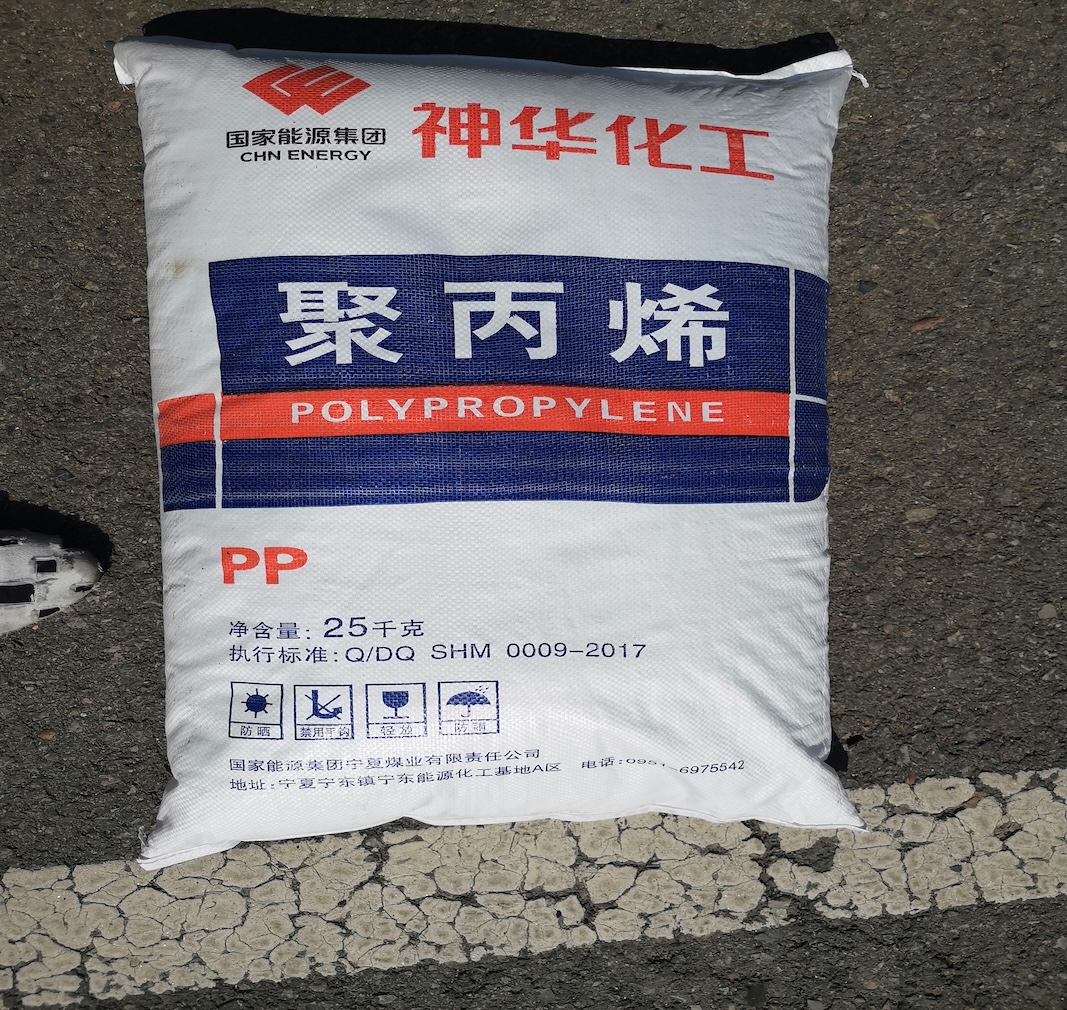
Run one 25 kg-bag lot at your current draw ratio and log head pressure, tape breaks per shift, denier variation and the drop-test result of finished bags. Compare these figures with your current grade rather than a datasheet. Chengnuo provides the TDS and a batch COA with each shipment, so trial results can be traced back to a specific lot.
Conclusion
Ningxia Coal 1102L suits woven bag production because it combines homopolymer stiffness, a moderate 3.0 melt flow, a clean additive system and a workable extrusion window. It fits strong, standard-denier sacks best and needs a UV package for outdoor use. A short line trial will confirm the fit faster than any specification sheet. For data or a quote, visit the Ningxia Coal 1102L product page.
References
- Vistamaxx Performance Polymers PP Raffia Factsheet – ExxonMobil Chemical
- New Luban High-Speed Raffia Grade Trials – OQ
- Advanced-PP 1102L Datasheet – UL Prospector
- PP Homopolymer P1045RG Technical Datasheet – Indian Oil Corporation
- S1005 Raffia Grade Polypropylene TDS – CHN Energy Yulin Chemical
- DPRP DH050SG Technical Data Sheet – Dangote Petroleum Refinery & Petrochemicals